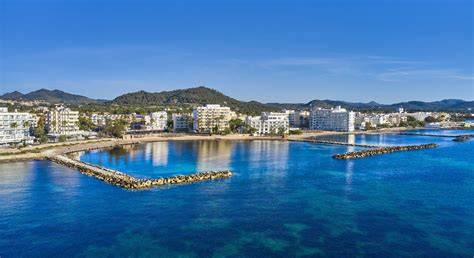
Mallorca's golden coves and mountain views set the scene for a perfect escape.
Introduzione all’area: Cala Bona, Cala Millor e l’insieme della costa orientale
Mallorca's golden coves and mountain views set the scene for a perfect escape. Note: testo del draft non va alterato
Origini e storia dell’isola
Majorca (Mallorca), is the largest of the Balearic Islands.
The island was first inhabited by the Talaiotic culture, a prehistoric civilization that left behind impressive megalithic structures such as the Talaiots, or stone towers, that can still be seen today.
The Talaiotic people were skilled farmers and hunters, and their influence can still be seen in the traditional agricultural practices and cuisine of Majorca.
In 123 BC, the island was conquered by the Romans and became part of the Roman province of Hispania.
The Romans introduced new crops and technologies to the island, and their legacy can still be seen in the ruins of ancient cities and villas scattered across the island.
After the fall of the Roman Empire, Majorca was invaded by various groups including the Vandals, Byzantines, and Moors.
The Moors, a Muslim population from North Africa, ruled the island for over 300 years and left a lasting impact on Majorcan culture, language, and architecture.
Many of the island's most iconic buildings, such as the Almudaina Palace and the Arab Baths, were built during this time.
In 1229, Majorca was conquered by King James I of Aragon, marking the beginning of the Christian rule on the island.
The island became an important trading center and its ports were vital for the economy of the Kingdom of Aragon.
The capital city of Palma, with its impressive Gothic cathedral and city walls, flourished during this time and became a hub for commerce and culture.
In the 19th century, Majorca became a popular tourist destination for wealthy Europeans, drawn to its beautiful beaches and mild climate.
The island's economy shifted from agriculture to tourism, and many luxurious hotels and resorts were built to accommodate the influx of visitors.
Today, Majorca is a popular tourist destination for people from all over the world.
Come arrivare a Cala Bona e muoversi sull’isola
Getting to Cala Bona, Spain and getting around.
Valid passport for the duration of your stay.
Visa not required for EU/EEA citizens and most other nationalities for short stays (up to 90 days in a 180-day period).
Driving License: Foreign licenses are valid. An International Driving Permit (IDP) is recommended for non-EU licenses.
Driving Side: Right-hand side.
Road Conditions: Roads are well-maintained, with scenic drives through the Serra de Tramuntana offering breathtaking views.
Narrow roads in rural and mountain areas require caution.
Speed Limits: 50 km/h (31 mph) in urban areas, 90 km/h (56 mph) on open roads, 120 km/h (75 mph) on highways.
Traffic Rules: Parking can be limited in Palma and near popular beaches.
Mallorca offers a variety of transportation options to help you explore its stunning beaches, picturesque towns, and scenic countryside.
The island’s public bus network is an affordable way to reach popular spots like Palma, Alcúdia, and Sóller, with frequent routes that make travel easy.
For more flexibility, renting a car or scooter is ideal for venturing into hidden coves, charming villages, and the island’s rugged interior.
Taxis are available in major towns, offering convenient door-to-door service.
Idioma, valuta e servizi utili
The official language spoken in Majorca (Mallorca) is Spanish.
The official currency in Majorca is the Euro (€), which is widely accepted throughout the island.
Credit and debit cards are widely accepted in Majorca, especially in large establishments. However, it is always advisable to carry some cash for smaller transactions or in case of any issues with card payments.
ATMs are widely available in Majorca, and most of them accept international cards.
In restaurants, a tip of 5-10% of the total bill is customary. Some restaurants may include a service charge in the bill, so it is important to check before leaving a tip.
In bars, it is common to round up the bill or leave loose change as a tip.
The standard Value Added Tax (VAT) in Majorca is 21%.
* Wi-Fi: Freely available in hotels, cafes, and restaurants.
Eventi, cultura e vita locale a Cala Bona
Civil ceremonies are mandatory for legal marriages, with many couples opting for symbolic ceremonies afterward at scenic locations.
Costs: Modest administrative fees for civil ceremonies.
Scenic venue rentals involve additional costs.
Optional Religious or Scenic Venue Ceremony: Mallorca offers stunning venues for weddings, from historic churches to luxury villas and beachfront resorts.
The cliffs of Cap de Formentor, the gardens of La Residencia in Deià, and the private estates near Alcúdia are popular choices.
Vita a Cala Bona: dove mangiare, passeggiare e cosa vedere
Cala Bona is a small harbor and holiday resort on Mallorca’s east coast whose focal point remains by the water to this day.
Around the former fishing harbor, boats lie beside low quays while restaurants and terraces open onto the seafront promenade.
Immediately to the south, the resort merges with Cala Millor along the coast.
The resort is particularly worthwhile for people who appreciate short distances, waterfront dining and easy activities that require little planning.
The harbor, promenade and beach can conveniently be combined.
Its most important link to the past is the harbor itself: the resort developed from a small natural fishing harbor without its maritime heart disappearing completely.
For residents, the tourist focus has two sides. Restaurants, accommodation, a shopping street and bus connections shape the everyday infrastructure, while the season also changes the pace considerably.
The resort began to develop around a sheltered natural inlet. A few families made their living by fishing and selling their catch. Lobsters were also reportedly kept in enclosed areas among the rocks.
The animals were considered a special delicacy in the surrounding area.
These origins are still easier to recognize in present-day Cala Bona than in many holiday resorts that have been completely transformed.
The harbor now also serves as a marina, yet its modest size and fishing boats preserve part of its former character.
Esperienze pratiche e itinerari
Cala Bona is geared more toward relaxed dining and drinks than a pronounced nightlife scene.
Anyone looking for a livelier selection can extend the walk toward Cala Millor.
The promenade leads south to Cala Millor without requiring any organized transport.
The route is largely level and connects several sections of the coast.
Boat trips are among the most obvious activities.
Excursions are offered along the east coast, including glass-bottom boat tours and trips departing from Cala Bona or neighboring Cala Millor.
When planning, it is worth checking the departure point and actual route carefully.
Some excursions use Cala Bona in their name but depart from Cala Millor or call at several harbors.
Cala Bona is used as a starting point for cycling tours on quieter roads and paths.
The flat coastal zone makes it easy to begin, while the Llevant hinterland offers more varied routes.
Storico e festival
A cherished local summer tradition is dedicated to Mare de Déu del Carme, the patron saint of fishermen.
It takes place in July and directly reflects Cala Bona’s maritime origins.
The harbor and promenade become the main event venues.
The highlight falls on the feast day of 16 July.
The Processó Marítima, the procession on the water, is especially distinctive. It presents the harbor not merely as a backdrop but as a bearer of local identity. Fireworks conclude the celebrations.
In September, Cala Millor and Cala Bona jointly celebrate the Festes del Turista.
The festival marks the transition from the main summer season into a quieter period and is explicitly intended for visitors, residents and employees of the holiday resorts.
The program includes music, parades, Mallorcan dance, culinary events and performances in public squares.
In the 2025 program, the harbor of Cala Bona served as the venue for a wine night, a flamenco show and a Mallorcan dance performance.
Both major series of events use the same space but tell different chapters of local history.
In July, the connection to fishing, the sea and the patron saint takes center stage; in September, the focus is more strongly on the shared Cala Bona-Cala Millor holiday region.
Programs are arranged anew each year.
The maritime focus in July and the joint series of events with Cala Millor in September remain dependable features.
Доби/бида: Как добраться и сколько времени занимает путь
From Palma Airport, the road route follows the Ma-15 and then the Ma-4030 to Cala Bona.
The distance is 72 kilometers by road, and the journey takes around 63 minutes.
Cala Bona is therefore particularly suitable as a base for activities in Llevant and along the east coast.
From the center of Palma, the distance is 74 kilometers by road via the Ma-15 and Ma-4030.
The journey takes around 69 minutes.
Anyone visiting Cala Bona as part of an island tour should treat the east coast as a destination area in its own right.
Cala Bona is served by public buses.
Stops are located both at the marina and in the northern part of the settlement, meaning that not every journey has to begin at the same point.
For visitors without a car, the continuous development linking Cala Bona with Cala Millor is an advantage.
Many journeys within the resort can be made on foot, and organized excursions sometimes offer pickups in Cala Bona and Cala Millor.
The harbor, beach, restaurants and transition to Cala Millor lie along an easy-to-follow coastal axis.
Anyone staying centrally does not need a car for the resort center.
The walkable connection is also important for everyday life.
Cala Bona does not end in isolation at its southern edge but continues into a larger coastal settlement.
This places a wider range of amenities within reach without requiring every errand or meal to involve a car journey.
Резюме практический маршрут и ориентиры
Begin with a circuit of the basin, then follow the promenade south to the beach and onward toward Cala Millor.
The harbor is the logical starting point for first visits, with a compact walk offering views of boats, quays and the seafront.
For residents and visitors alike, Cala Bona remains a place where the maritime past informs the present, and where the coast, dining and leisure intertwine in a relaxed Mediterranean rhythm.